Basic arithmetic yields a surprising result, and some equally surprising insights. My working assumptions probably match those associated with the school years of about half of Americans; your results may vary.
After one year of pre-school (1 teacher), I attended grades K-6 (total: 7 teachers, plus an equal number of specialists in art, gym, etc.). Then, three years of junior high school (assume 6 different classes, so 6 teachers, plus specialists takes the total up to 9, then multiply by 3 years = 27 teachers). Similar math for three years of high school (assume 6 classes, 3 specialists, 3 years =27 teachers). Four years of college nearly completes my total (5 classes, 8 semesters = 40 teachers). Add a few post-graduate courses (5 teachers).
How many teachers were paid to educate just one person?
– 1 pre-K
– 7 K-6
– 27 JHS (7, 8, 9)
– 27 HS (10, 11, 12)
– 40 College (freshman, sophomore, junior, senior)
– 5 Post-Graduate (after that)
TOTAL: 107
Let’s round the number of teachers to 100 because there were probably a few teachers who taught more than one course.
How much time did I spend with each teacher?
- Pre-K: probably 20 hours per week for about 40 weeks (summer off) = 800 hours = the equivalent of 100 8-hour days
- Each of the K-6 teachers: 6 hours each day x about 180 days = about 1,200 hours = the equivalent of 150 8-hour days
- Each junior high and high school teacher: 3/4 of an hour each day x about 180 days = about 135 hours = a bit more than 3 weeks
- Each college professor/instructor (per class section): 3 hours per week x 12 weeks = 36 hours = just under 1 working week

Being a teacher remains one of the best jobs in the world. The best teachers make direct connections with students. Elementary school students spend lots of time with students, so these connections occur more naturally and more often. High school teachers spend far less time with individual students. To learn more about why you, or someone you know, ought to become a teacher, watch the video by clicking on the image. The video comes from a wonderful site called Teach.com.
I remember the names of every elementary school teacher, but few of my college teachers. Now I understand why: I spent the equivalent of about 30 weeks with the former and the equivalent of about a week with the latter.
That got me to thinking. What’s life like on the other side? A high school teacher is seeing perhaps 150 students per year. Divide that by a 40-hour work week, and if each student’s needs were addressed individually, each of us would receive an average of 15 minutes of instruction per week.
Efficiency
Of course, we don’t distribute resources that way. Instead, we mass produce junior high / middle school and high school education. One teacher, 150 students per 9-month session, managed as 5 groups of about 30 students. The most efficient way to manage this process would seem to be standardization and extensive testing to assure an acceptable degree of effectiveness. In college, this system stretches the extremes: more than 100 people in lecture halls during the early years, and perhaps fewer than ten people in a senior seminar. The underlying premise: people who teach in college ought to be specialists, allowing undergraduate students to learn about Shakespeare from one teacher and Chaucer or John Steinbeck from another. Certainly, no reasonable college educator in an institution with sufficient resources would consider the possibility of one professor teaching both Introduction to Psychology and Environmental Geology.
And yet, that’s precisely what we require of our K-6 teachers. Most elementary school teachers are able to cope with more than half a dozen school subjects, and probably closer to a dozen of them. They manage the same students for the better part of a working year. As teachers, they spend enough time with the students to develop one-to-one relationships, and to craft lessons so that they are effective for thirty individual, naive, developing minds. One teacher spending a lot of time on a lot of topics with a few dozen students makes intuitive sense. It seems as though that would be a good way for a teacher to operate, and it seems as though it would be a good way for students to learn.
The Switch
So why do we change modes in junior high school? Why do we replace one teacher with nine people? Do we believe that students in sixth grade require no specialized instructors, and that students in the seventh grade require each teacher to be an expert in his or her field? Certainly, middle schoolers are coping with all sorts of challenging changes in their lives. Why not offer the stability of a single teacher for the entire day, one who is reasonably well-versed in a half-dozen school subjects?
Let’s take the argument into high school. Our high school model encourages students to interact with many adults who teach, but the amount of time that each student spends with each teacher is so modest, the argument is easily dismissed. Maybe the answer is not 9 high school teachers in 45 minute sessions, but 3 high school teachers in 2 hour sessions. Parse the subjects any way that makes sense—our current system of math, science, social studies, English, etc. is no more or less of an arbitrary way to organize the world’s knowledge as it applies to a tenth grader. Fewer teachers, more time with each teacher, more time for each student-teacher relationship.
What about college?
As an English major who was required to read every one of Shakespeare’s plays and other works in two semesters [24 weeks] (I recall some of the names of his works, but not much more), I’m thinking there are probably too many courses, and not enough time spent on any one of them. Perhaps it would be better to provide freshmen with a breezy introduction to many topics in preparation of in-depth explorations in subsequent years. I want to be a freshman experiencing a parade, a dozen topics that may interest me: Shakespeare for the first two weeks, geology for the next, Gender Studies for the third, then comparative religions, law for the fifth, and robotics for the fourth, fifth and sixth. Let me spend fifty or sixty concentrated hours on each of these topics—without the silly distraction of four other classes that have little to do with one another—and I’ll feel as though I’m learning something. By the end of my freshman year, I may be able to participate in an informed conversation about infrastructure, fractals, the future water needs in Sub-Saharan Africa, the economics of Brazil, and Joseph Campbell’s ideas on primitive mythology. (Sounds like TED on steroids.)
After an invigorating freshman year, college students choose what they want to learn. Maybe they spend half of their time in a deep concentration of their own choosing, a quarter of their time learning what others insist they must know in order to graduate, and a quarter exploring topics unrelated to their major. If they want to enter a profession with specific requirements—engineering, medicine, law, etc., maybe that specialization follows a solid general education.
Reducing the Total
How does that affect the number of teachers involved in a students’ life? Reduce the 60+ teachers in K-12 to 2o. Students spend more time with each teacher, and teachers spend more time with each student.
Not a perfect solution. Just musings on the one-hundred people who educated me. To those teachers, thank yo! To the many, perhaps too many, we ought to work together, as communities, to determine whether there might be a better way.
 Every once in a while, I’ll catch an episode of The Thistle & The Shamrock on a public radio station. Seems to me, the show has been on forever, but I’ve never thought much about the program’s title. Of course, it refers to music from Scotland and from Ireland, but that’s a very small part of the story that its host / producer tells in her new book, Wayfaring Strangers: The Musical Voyage from Scotland and Ulster to Appalachia. (From the start, I should point out that this is a fabulous book, a work deserving of all kinds of awards and many quiet hours of reading accompanied by many more spent listening, preferably to live music.) In fact, it’s not just Ms. Ritchie’s book: storytelling and scholarly research duties are shared by an equally talented music lover, Doug Orr, whose Swannanoa Gathering is, among many good things, the place where the idea of the Carolina Chocolate Drops took shape: “they have helped revive an old African American banjo tradition that was fast disappearing.”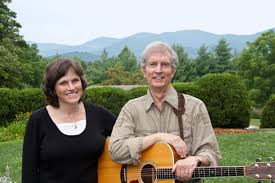

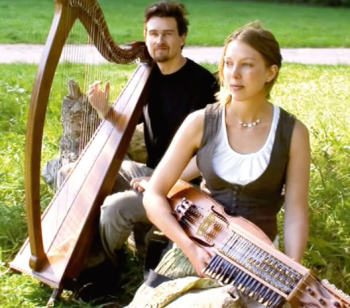
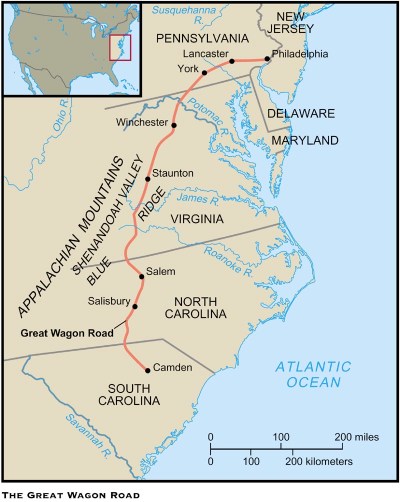 The authors have done just that, and so, in their way, have Bob Dylan, Woody Guthrie, Pete Seeger, and dozens of others whose names may be less familiar. But the authors have accomplished more. They’ve managed to weave a very complicated story together, a saga of migration and evolution, Viking travels and minstrel shows, song fragments that survived for nearly a millennium, wonderful artists from Scottish poet Robert Burns to Kathy Mattea. There is so much love and passion for the history, the music, the instruments, the people, the land. There’s a CD bound into the back cover so you can hear the music, with every track explained in fascinating detail. There are dozens of handsome full page photographs that provide a sense of the land, plus illustrations of the instruments. Every time I wanted to know more about an interesting concept, I’d turn the page and find a very comprehensive briefing on, for example, “The Ceili, or Ceilidh” (a social event with music that originated in the eighteenth and nineteenth century in Scotland and Ireland); the dulcimer; “Child ballads” (Scots and Irish ballads classified by Harvard Professor Francis James Child, and often referred to by their numbers). I had never heard of The Great Philadelphia Wagon Road. but now I understand its importance. Before Ellis Island, Philadelphia was the American point of entry for most immigrants from Ulster. They’d travel this early highway west and then south, ferrying across the Susquehanna River to Winchester, Virginia (home of Patsy Cline) and the Shenandoah Valley and on to the Yadkin Valley terminus in North Carolina (think in terms of today’s Boone, NC); Daniel Boone extended the trail to what became the Wilderness Road out to Kentucky’s Cumberland Gap.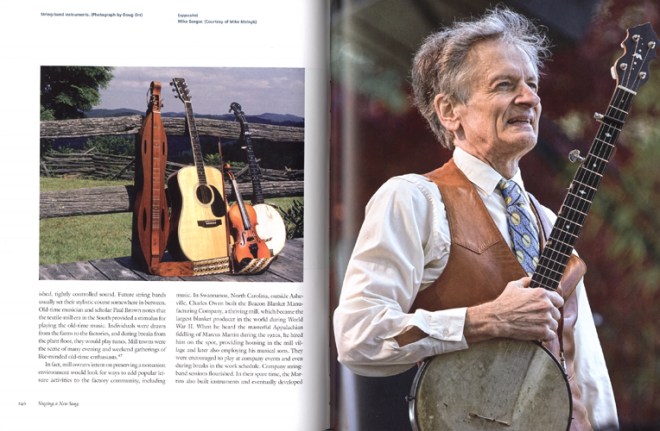


 In book, lecture and conversation, Scott McCloud has taught me a lot. But it’s one thing to be a teacher and another to be the creator of the material. The expectations become unreasonably high. The student wants to see every lesson incorporated in exquisite elegant prose and picture. The story must be perfect. The storytelling, better than perfect.
 As David tells his story, the evidence of Scott’s visual storytelling skill propels the sense of reality. There are extreme close-ups and wide streetscapes, frames without dialog that communicate more than those with words, and an interesting isolation technique in which David is fully inked against a world that is rendered only in sketch form. There’s a girl, of course, an angel of sorts, and as in the second act of Stephen Sondheim’s Sunday in the Park with George, a difficult-to-fathom big city art scene (Scott and Stephen wrestle with some similar themes.) Main character David tells us that he hates parties and by extension, the whole scene, but those pages are among Scott’s very finest: a crowded multi-page sequence where you can feel the energy of a noisy large-scale party and the frustration in coping with the idiots who won’t leave you alone while you’re trying to keep some girl within your visual range, while you’re trying to chase her before she’s gone forever. (Gee, he does this well!)
 For me, that’s the treat, same as reading Understanding Comics, same as watching Scott lecture, same as spending time with him. We’re living in a world filled with stories and ideas, and clever ways of communicating. If it’s all as simple as A-B-C, then the magic isn’t so magical. Life’s more complicated than a straight series of logical events—and that’s the beauty of a well0-crafted graphic novel. No shopping mall cinema audiences to satisfy with a clearly articulated happy ending. No need for extreme helicopter crashes or uncomfortable explosions punctuated with graphic violence. The story can be personal, it can be told by a single storyteller (provided the storyteller is willing and able to spend several years writing and drawing his epic), and it can be somewhat nonlinear. With that, a reader’s note: do it in one day. That is, find yourself a good stormy day, turn off the cell phone, and just lose yourself. Don’t think too much—just allow the storyteller control your mind for a few hours. We do this for movies all the time—with this book, you don’t want to disengage. You want to pay attention, and grab the ideas as they’re unfolding, then return to study the craft. Last weekend, I read the book. Today, a Saturday, I returned to study the construction of the visual sequences, the use of characters, my favorite scenes and how they were put together.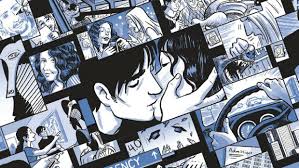

 Digital Insider