
For this blog, most readers are located in the U.S., and Canada. The countries with the fewest readers are in the countries indicated in white. I suspect there is more happening, or not happening, in those nations, and that’s what this particular blog article will address.
It would be easy for me to dismiss nations with no readers as simply uninterested in the issues, or, in some cases, unable to read the blog in its native English language, but this article about a lot more than this particular blog (though it would be fun to claim readers in every nation on the planet). Before I get into the research, and related thoughts, here’s a list of where this blog is not read. In the case of Africa and Asia, I’m surprised by number of nations where people have read this blog.
In South America, only French Guiana, and in Europe, only Kosovo tallies at zero blog readers to date. No surprise that North Korea is also on that list; the other Asian nations are Kazakhstan, Tajikistan, Turkmenistan. In Africa, there are many counties–probably about half the countries on the continent, not yet in the fold: Western Sahara, Mauritania, Mali, Niger, Chad, Sudan, Eritrea, Ethiopia, Somalia, Burkina Faso, Guinea, Sierra Leone, Liberia, Cote d’Ivoire, Togo, Benin, Cameroon, Central African Republic, Republic of the Congo, Gabon, Equatorial Guinea, Sao Tome and Principe, Democratic Republic of the Congo, Tanzania, Botswana, Mozambique, and Madagascar.
Seeking reliable statistics about some or most of these nations as some sort of a cluster, I discovered a useful United Nations site that listed most of these nations, along with many smaller ones (in Oceania, for example), in category 199, “Least Developed Countries.”
I then reviewed the 2012 report on the UN’s Millennium Development Goals. The goals are focused on poverty, human rights and infrastructure, disease prevention, hunger, gender equality and education, and although education is the only item on this list with an undeniable direct connection to Internet use, much of Africa continues to face severe challenges in labor productivity, one link in the chain to open and available Internet access. Furthermore, more than half of the world’s children not in school live in sub-Saharan Africa, another suggestive indicator. What’s more, only about 1 in 4 people are literate in this region, and only about 1 in 3 are literate in southern Asia, so limited Internet use in these regions may be of lesser importance than sheer literacy.
In 2011, there were 7 billion people on earth. Two thirds of them had no Internet access. Once again, sub-Saharan Africa and other developing regions posted the lowest rates.
So that’s the official global view. I wondered about the local view, and found a site called Edge Kazakhstan with a story about the local popularity of Facebook, and about the popularity of the Internet, generally, in Kazakhstan.
Statistics say social media sites are among the most accessed in the country… Number one is Russian social networking page VKontakte (http://vkontakte.ru), second is world leader Facebook (www.facebook.com) and in the third place is another Russian site, Odnoklassniki (www.odnoklassniki.ru)…Askar Zhumagaliyev, Kazakhstan’s Minister of Communications and Information, in a June Twitter posting said that 34.4 percent of the nation was using the internet as of early 2011 – compared to 18.2 percent in early 2010. He has also tweeted that he plans for the entire country to be covered by high-speed internet by 2015.
Social Bakers keeps track of social media use in nations throughout the world. I checked in Tanzania because Facebook use in Africa is growing very rapidly, despite a relatively low rate of Internet penetration, which is also growing fast, especially in the centers of population. Five years from now, connectivity in all but the most challenged or remote areas of Africa and Asia will not reach international averages, but they will be far higher than today (reliable statistics are hard to find, but Vodafone, a large international supplier, will likely serve between one-third and one-half of the technically available population).
I suspect that what I write may not be what most people want to read in Kazakhstan or Tanzania, but I would be surprised to find the list of nations who have never experienced the pleasure of reading this blog to be reduced by half within the next year (or so). The majority of my readers will continue to be found in U.S., Canada, the U.K., but I know that future map will show a wider distribution than the one I published today.
By the way, if you are reading this blog in a nation other than the U.S., I wonder if you would just comment and tell us where you are in the world. Thanks!
 I just finished reading a book about the New Deal, that remarkable FDR-era transformation of America for the average American. Certainly, I knew and understood pieces and parts of the story, but there were so many factors, I needed a good writer (the author won a Pulitzer Prize) to put the whole thing into context for me. The author is Michael Hiltzik, and the book is called, simply, “
 The woman in the photograph was a poor soul, without friends, the subject of ridicule among Seattle schoolchildren. She lived in a hovel. When the growing city of Seattle cleared its native population, she remained where she was, and the city grew up around her. Kick-is-om-lo was her name, but that was difficult to pronounce, so the local folk called her Princess Angeline. In 1896, Kick-is-om-lo was paid one dollar to pose for this picture–the equivalent of what she was able to earn in a whole week–by a struggling young photographer named Edward Curtis. To say this would be the first of many such images would be a substantial understatement.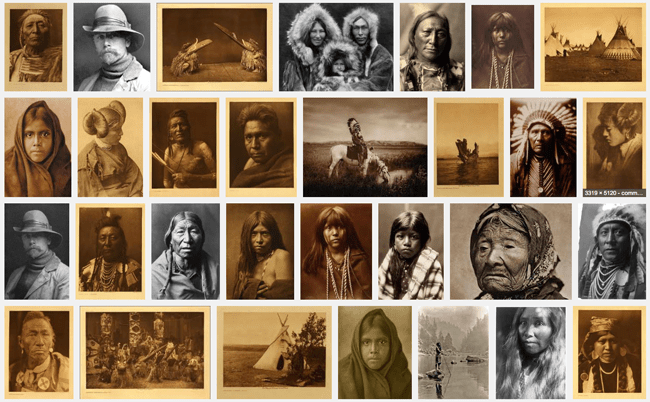
 AirStash. Simple idea: load some movies on a 8GB or 16GB SD card–the ones you use in a camera that are about the size of a postage stamp–then wirelessly connect the small AirStash device to watch movies (or review documents) on your iPad, iPhone, or Android device. It costs about $125. Use it once and you’ll carry it everywhere, as I do.
 A ZOOM Q2H2. With cameras and camcorders now built into phones, why buy a small video recorder for $199? Because the sound and the picture quality is outstanding, but the device is small. What do I mean by “outstanding?” Video: 1920×1080, 30p HD. Audio: 24 bit, 96 kHz PCM. Record the results on an SD card.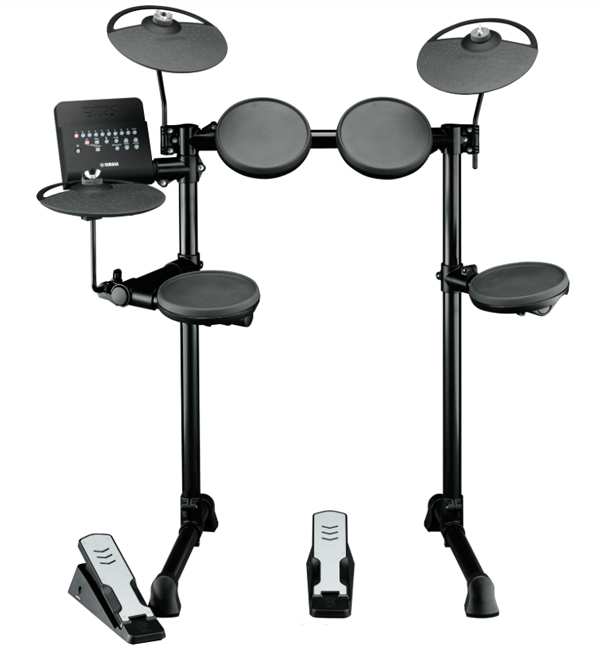



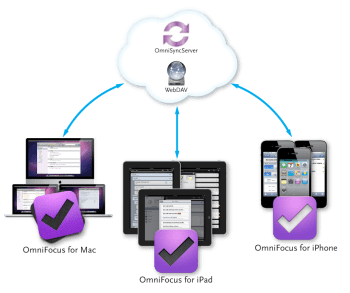 So what’s the big deal about OmniFocus? There are dozens of to-do and reminder apps, with sync, available for far less than OmniFocus.
 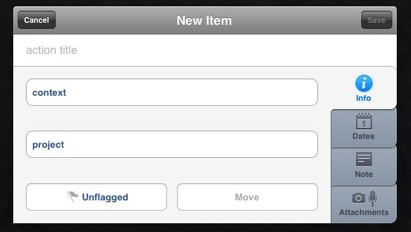 Although it is possible to make a quick task entry, the more complete entry panel is more useful. After naming the task, I select a context from my own list that includes: Awaiting Response, Call, Create, First Contact, Followup, Just Do It, On Hold, Purchase, Research, Schedule, Visit Web Site, and Write. Then, I select a project, again from my own list that includes: Art, Books, Digital Insider, Home, Music, Software, Travel, Web Site, and various, specific work-related projects. I can stop there, deciding to add a flag to any high-priority tasks, but I prefer to add a due date to every task (start dates are also an option, but I don’t work that way). There’s a nice big note field, and I use hat to capture URLs, reminders of the most recent attempted contact (left phone message on 3.13.2013; sent reminder email on 10.12.2012). I can add a photograph, .jog, .gif, .png, or record an audio message.

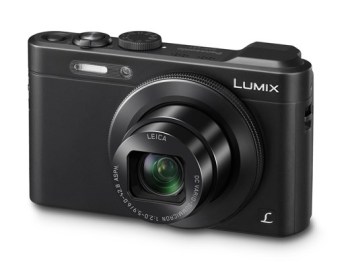
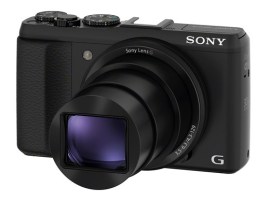

 Miss Bartell (my fourth grade teacher): Would you rather have one cookie or four cookies?
 Anyway… I woke up this morning to an announcement from Sony… with all sorts of enticing promises: improved detail, improved color rendition, better audio, screen mirroring so what’s on your tablet can be viewed on your new TV (albeit it in lesser detail, a service currently available to Apple users).

 Digital Insider