Michael Freeman’s Eye, Vision and Mind

Over time, I’ve bought, or browsed, dozens of books about photography. Most of these books are either too basic, too technical, or remarkably unfocused on the impact of picture making. Several books by Michael Freeman set a high standard for smart books with a strong aesthetic and storytelling sense, and yet, they are written at a level that provides solid, practical advice for even the most casual photographer. I’ve become a big fan of these books, and I would recommend one, two or all three volumes as holiday gifts for anyone with even a passing interest in digital photography, and, I would strengthen that recommendation if the gifts are intended for someone who is serious about photography.
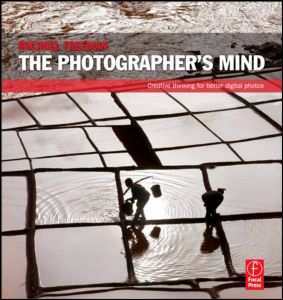
Photographers MindOf the three, I think I like The Photographer’s Mind best. The opening chapter is not about lenses or exposure. Instead, the book opens with a chapter entitled, “Intent.”

If you want people to pay attention to your photography and enjoy it, you have to give them a reason to look at it for longer than a glance… [and this is] more about why than how.

And so begins a well-illustrated consideration of beauty, cliche, irony, the mundane, revelation, and other core concepts that go far beyond the snapshot. The second chapter, “Style,” explores harmonics and balance, relationships between visual style and musical style, opposition, minimalism, engineered disorder… you get the idea. This is a smart, thinking person’s approach to photography, aspirational but practical, nicely written but the focus is on the (many) sample images. And the pictures really are terrific–Freeman’s intelligent, emotional approach to teaching is well-represented by his work.
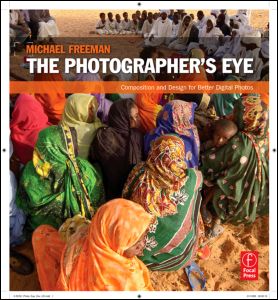
Photographer's EyeAll three books are personal favorites, but the second book I would buy is (rhymingly) The Photographer’s Eye, a book about design. Freeman considers the relative merits and artistic potential of various frame formats, horizons, frames within frames, and other tools/tricks of the trade. My favorite chapter is the second one, in which musical and aesthetic concepts offered in opposing pairs: soft/hard, thick/thin, diagonal/circular, much/little, sweet/sour, and more. Consider figure and ground, rhythm, single vs. multiple points, dynamic tension. I know that these ideas are dancing in my head when I’m out shooting for the day, but they’ve always been disorganized, and never quite coherent. With Freeman as a teacher, my perspective changes. I study his images, read his words, and understand the tool in my hands differently. And I want to spend hours and hours practicing.
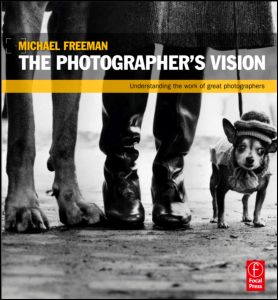
Photographer's VisionI think of the third volume, The Photographer’s Vision, as the most advanced of the three. This is the one that considers purpose and greatness, the volume that places Lee Friedlander, Robert Capa and Brassaï in contexts where their work, or, at least, their unique creative approaches, are presented so that a contemporary amateur can both appreciate and perhaps emulate the work of legendary professionals.

Gosh, these books are good.

And then, I take a deep breath. I search for Michael Freeman online, and it turns out, he is a cottage industry. So many great ideas, so much valuable instruction, so little time.

Buy these books for a family member or a friend. They’ll be counted among this year’s favorites, I promise.

It’s official: everything has changed.


I just reviewed an astonishing PowerPoint from Mary Meeker at Kleiner Perkins. It contains a thorough explanation of our rapidly changing, and changed, world. From mobile phones and to the Rose Bowl, newspapers to cash registers, borrowing and lending money to door locks, hiring to education, our contemporary wave of technology  has transformed the world.

The deck is 88 pages long, and worth all of the time you will spend thinking about it today, this week, this year.

I will add to this post tonight. Right now, it’s off to work, transforming an old TV station into something entirely new. (Thanks, Mary, for the encouragement. And for the pile of useful, persuasive data.)

A Fact Can Be a Beautiful Thing

It’s often tempting to consider the past through a present-day lens, and that causes distortion. Take, for example, the idea of a fact. Our ancestors did not elevate the fact as anything of importance. Instead, they considered facts to be evil, in opposition with God’s plan. This way of thinking begins with perception, a capacity that we share with animals. “For them, knowledge had to be something more than what we learn from our senses, because it is such a distinctly human capability of our God-given and God-like soul.”

Thomas Bacon, known for the Scientific Method and for his cool combination of dapper hat, moustache-goatee combo, and stylish  collar.

Thomas Bacon, known for the Scientific Method and for his cool combination of dapper hat, moustache-goatee combo, and stylish collar.

It isn’t until the 1700s that the current idea of a fact takes shape. In the Italy of the 1500s, double-entry bookkeeping is among the first presentations of fact as a decision-making tool. In England, in the 1700s, Francis Bacon’s work on the scientific method led the way toward building theories based upon “particulars,” not deduced from a grand theory. Of course, this way of thinking sidelined generally accepted beliefs, a radical idea at that time, and in our times, too.

220px-Thomas_Malthus

Thomas Malthus

You may recall that Thomas Malthus theorized that food supply would not keep pace with population growth. His initial documents were based, mostly, upon deduction. His later documents were based upon well-researched fact. The shift in thinking occurred during his watch, before and after the year 1800.

Portrait of Jeremy Bentham by Henry William Pickersgill

Portrait of Jeremy Bentham by Henry William Pickersgill

Enter Jeremy Bentham, a Malthus contemporary. Bentham’s theory, simplified: government ought to provide “the greatest happiness of the greatest number [of people]” In order to do the job, government would need a clear picture of the people it served (also a new idea, government as service, but that requires another article).

The word “statistics” enters the language around this time: stat, of course, is German for the state.

By the 1830s, the British government is obsessed with this powerful tool: facts. They commission a series of Blue Books filled with facts, statistics, anecdotes, interviews and more. The Blue Books are reports about “poverty, crime, education, and other social concerns.”

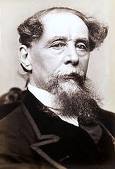
Charles Dickens, who made fun of his government's newfound love for facts.

Charles Dickens, who made fun of his government’s newfound love for facts.

By the 1850s, the clever novelist Charles Dickens grows weary of the fact-based Blue Books. From Dickens’ Hard Times, “We hope to have, before long, composed of commissioners of facts, who will force the people to be a people of fact and of nothing but fact.”

By around the 1900s, fact-finding missions had become common, and World War I becomes the first war fought, largely, upon the basis of facts.

At the risk of capturing the obvious idea, our contemporary media environment is skewed because opinion and pontificating is, often, more entertaining than fact-based thinking. Rush Limbaugh gets the ratings; the Encyclopedia Britannica ceases publication. Constitutional scholar Cass Sunstein says, “Many people are mostly hearing more and louder echoes of their own voices.” His context is the internet, where groups of like-minded people share their beliefs, and by their numbers, magnify ideas that may not be fact-based into cultural touchstones. He goes further to explain that members of those groups are becoming less likely to communicate with people outside the group, and wonders whether this supportive groupthink is detrimental to democracy. (So much for the hope that the abundance of information, and facts, on the internet would encourage interaction between these groups.)

And that leads to Nicholas Carr, author of The Shallows: What the Internet Is Doing to Our Brains, who believes that the internet is “weakening our capacity for the kind of ‘deep processing’ that underpins ‘mindful knowledge acquisition, inductive analysis, critical thinking, imagination, and reflection.”

220px-Al_Gore_at_SapphireNow_2010_croppedA parallel path also leads to Al Gore, who asked this question in his book, The Assault on Reason: Why do reason, logic and truth seem to play a sharply diminished role in the way American now makes its important decisions?”

Perhaps the answer to Mr. Gore’s question is complexity. We learn arithmetic but not calculus, we have been taught to think in simple linear terms, not in terms that help us to understand the complex, dynamic system that our society has become. Our contribution to the chain begun by Bacon: the mapping of complex systems that change over time. It is these systems that draw facts into the future, and these models that provide potent vaccination against those who theorize on the basis of beliefs, not facts.

On another parallel path is the passionate amateur. Included in that class would be both Charles Darwin and Gregor Mendel, neither one a scientist, each a relentless cataloguer of observations, and, as a result, a theorist whose ideas are based upon endless study and analysis.

Jenny_McCarthy_at_E3_2006And, there is the celebrity whose role is related to a megaphone. Ideas that might not otherwise reach a large audience become popularized because a celebrity become involved. When former Playboy model Jenny McCarthy and actress Jenny McCarthy started making noise about vaccinating our children, people paid attention. The Michael J. Fox Foundation is attempting to resolve the delicate balance between Mr. Fox’s own story and fame, and the broader agenda that must drive the Parkinson’s foundation (that carries his name). The Fox foundation has been intelligent and thoughtful in its use of social media, engaging individuals, on a large scale, to participate in trials and other research. Here, the “particulars” are the individual cases, the undeniable truth of daily life with a disease not yet cured.

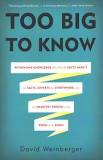
Too Big To Know

How does all of this come together? The fact is, we’re still figuring out the answer to that question. David Weinberger’s book, Too Big To Know, the source of many of the ideas and all of the quotes in this article, does a fine job in raising questions and providing examples. Addressing the crisis of knowledge (his belief, with which I do not wholeheartedly agree), Weinberger suggests that we open up access to a much broader range of facts; link everything in sight; dig deeply into institutions to make their knowledge available to a larger population; and relentless teach so that we all gain a better understanding of how our world works, and how it might work in the future.

BTW: The article’s title, A Fact Can Be a Beautiful Thing refers to love as explained by lyricist Hal David for the Broadway musical, Promises, Promises.

Superior Gift: Piano CDs by Corea, Jarrett and Lubimov

Yeah, it took me a while to understand what I was listening to, or two, and why I kept playing a pair of paired discs time and again. (Okay, sorry, I will slow down.)

For much of this past month, I have been listening to passionate, impressionistic performances by several extraordinary piano players (plus one more).

This sequence of listening began when I attended a wonderful performance by Chick Corea and his friend and frequent collaborator, Gary Burton. They’ve been on tour with the Harlem String Quartet, presenting a remarkably consistent, and now quite differentiated, version of late 20th and early 21st century jazz. Corea is a tireless composer, a man filled with ideas, a creative person never satisfied with one course of action. Like Yo-Yo Ma, Bela Fleck (also a Corea collaborator), and others who have been performing for several decades, Corea has one career with Burton, another as part of a jazz trio (with Christian McBridge and Brian Blade), and still another with Bobby McFerrin. The Burton performance was stunning, perfect in its way, endlessly interesting, and sufficiently inspiring to make me want to see Corea in his other formats.

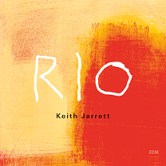
Which leads (at long last!) to the focus of this particular blog post, whose initial conception did not include Corea at all. Instead, it was to focus on Keith Jarrett, whose career has been somewhat more conventional in that he plays fabulous solo concerts–the newest being Rio, which was recorded in Rio de Janeiro–and as part of a trio with Gary Peacock on bass and Jack DeJohnette on percussion. There are probably two dozen Jarrett solo recordings, and every one is similar, but in its way, exhilarating, original, compelling, and consistently inventive. This is probably one of the best of the lot, but there are so many fine examples, it’s difficult to choose (and you certainly won’t go wrong if you purchase any of them). Rather than recommending one or two, I think it’s wiser for me to point you to a page that lists all of them on the wonderful All Music Guide site.

Jarrett and Corea worked together in Miles Davis’s band in 1970–a very long time ago in musical terms. It’s fascinating to listen to those nearly-a-half-century-old recordings, those initial flights into a fresher, freer, easier, less structured form of jazz and to consider the stops along the way, a way that has been so elaborately documented on some many recordings (for the most part, excellent recordings, with only the occasional excursion into dubious territory).

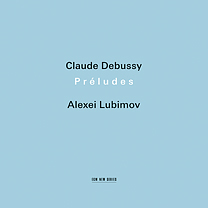
Now I find myself comparing Jarrett’s RIO with something much older, but very much from the same spring. Here, the composer is Claude Debussy. The pianist is Alexei Lubimov, sometimes playing his Bechstein beside another Alexei, in this case, Alexei Zuev, on his Steinway piano. Perhaps it’s the elegance, the presentation, the combination of control and fireworks, the seriousness… or the extraordinary skill that compels me to consider Debussy and Jarrett’s recordings as ideal companions for an extended listening session on a gloriously rainy or snowy afternoon. The latter is not new music–it predates Jarrett by more than a century–but the sense of freedom, the phrasing, the flights of fantasy and ecsstacy on, for example, “La puerta del vino,” sounds more like 21st century jazz to my ears than it sounds like traditional classical music.

At a certain point, writing about music really is like dancing about architecture, so I’ll stop here and not embarrass myself with a flurry of comments about Debussy’s individual preludes and how nicely they’re carried off by Lubimov on Preludes.

As the music begins to fade, and friends are pulling up to the house after a long drive (they’ll be hungry), allow me to simply recommend a pair of very good piano recordings, each a pair in itself (each is a 2-CD set), perhaps the ideal gift for just about anybody willing to take the time to really listen. Both packages are excellent.

Let me end with a note to myself: I need to learn a lot more about Alexei Lubimov, and spend time listening to his past work. He’s a new name for me, and after of month of listening to him play the piano, I am beginning to understand the many internet claims… he may be one of our contemporary keyboard musicians. I suspect Lubimov deserves a proper article of his own. Getting to work right now…

Your New TV: The Ideal Screen Dimensions

Watching television in 1958.

Buying a new television set is not easy. Some stores tweak the settings of their TV sets, some tweak the lighting, some show the sets with no adjustment whatsoever, and others optimize to make each set look great. Of course, all of this is utter nonsense because no store can reproduce the environment where you will be watching at home. The next time you visit Best Buy, do not make any judgment about brightness, color rendition, or other qualities of the image–whatever you see in the store, it won’t be what you see at home.

There is one thing you can do in the store, of course. You can stand in front of the screen and wonder whether the set will be too big, too small, or just right for your room. Actually, you probably shouldn’t stand in front of the screen. Instead, with the set at eye level (not mounted six feet above your head), you can make a reasonable judgment. Here’s how.

Before you leave home, grab a tape measure. You’ll want one person to sit down in the chair where they are most likely to watch TV. Measure from the tip of the person’s nose to the place you intend to place the screen. In most American living rooms, this dimension will be about 10 or 12 feet. In smaller rooms, it might be 7 or 8 feet. Just for the sake of example, let’s assume the measurement equals 11 feet. Jot down this calculation:

  • Feet = 11
  • Inches per foot = 12
  • Inches from nose to screen = 132
  • Divide by THREE = 44 inch screen maximum
  • Divide by FOUR = 33 inch screen minimum

Try that again, this time with a larger distance to the screen, say, 16 feet. That’s pretty far away, larger than most U.S. living rooms. Here’s how the numbers look:

  • Feet = 16
  • Inches per foot = 12
  • Inches from nose to screen = 192
  • Divide by THREE = 64 inch screen maximum
  • Divide by FOUR = 48 inch screen minimum

Sure, we’re Americans! We love our television screens!! We want them as large as possible!!! (You’ll find article after article insisting that bigger really is better. For some people, that’s true. For most people, nose-to-screen distance is not more than 9 feet–not 11 or 16 feet as in our illustrations above). Add 10 or 20 percent if you’re VERY serious about sports or movies. Add 50 percent if your entire life revolves around a home theater.

No doubt. Certainly, many retailers would certainly prefer that you buy a set that costs $2,000 or so instead of $1,000 or less. For most principal viewing conditions, a TV in the 46-55 inch range will be suitable. For a bedroom, the answer is probably under 40 inches.

Hey, one more thought. There’s a lot of confusion about LED vs. plasma screens, and if you’re not lucky enough to connect with a knowledgable floor sales person, you could make a poor (and heavy) decision in the wrong direction. LED sets are bright and ideal for rooms where there’s lots of ambient light. Good for spots, not so great for movies because their color rendition is, well, extended and somewhat unnatural. Plasma sets are not as bright, but they do a better job with skin tones and lifelike color rendition. But they run hot, use more power than LED sets, and tend to be heavier, too. If your room has any significant ambient light (coming from windows or fixtures), you may be spending a lot of time fighting reflections. For several years, plasma sets were not popular, but a renewed focus on this technology, especially from Panasonic and Samsung, has resulted in plasma screens now widely available, even from big box retailers.

Before you buy, study the reviews. Editorial reviewers have the benefit of seeing many sets under the same (simulated real world) viewing conditions, so their comments are often more meaningful than the advice of people on the sales floor. I think cnet does an especially good job with TV reviews.

One more thought. I’m sitting here writing on a 21-inch iMac, a computer whose screen I regularly use to watch videos. The screen is not much more than a foot from the tip of my nose, so there’s no way that my formulas make any sense for those of us (lots of us) who watch videos, and the occasional movie, in this way. That makes me wonder whether we’re again crossing the great digital divide to some new way of thinking about the relative sizes of humans and their screens. Maybe our next screens will seem small at 100 inches. Maybe one wall of every room will be a TV screen. Heck, maybe every wall of every room will be a screen. Lots to think about!


Einstein through a Distant Mirror

Context matters. Today, Einstein is the very model of a modern genius. That’s an easy image in the era of the internet, when folks can say and do pretty much whatever they please. A century ago, when the young theoretician conducted “thought experiments,” things were different. In a world where “innovation” appears in just about every business magazine, it’s difficult to imagine just how different life might have been in those days before the First World War.

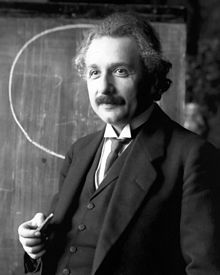
Albert Einstein in 1921, the year he won the Nobel Prize, and first visited the USA.

That’s the key learning from Einstein’s Jewish Science by Steven Gimbel, a professor at Gettysburg College. The author and his book do a wonderful job in framing the time, and the science, and the politics, and the religion, but neither musters much energy from its underlying question. (Spoiler alert: In the end, the author concludes that relativity is not an especially Jewish science.) He explains:

Einstein came to the scientific stage at a time when Western culture was in flux. Old social, political, artistic and intellectual structures were failing. Assumptions that had been protected for centuries were suddenly rejected despite all attempts to maintain them. And here, offering a new and bizarre way to see the entire universe was Einstein. The theory of relativity stands as a symbol of Gestalt shift, a complete change in perspective where you can never view the familiar in the same old way.”

(As I type, I wonder whether the shift that we’ve experienced via the Internet–which now offers instantaneous connections between billions of people all over the planet–would also be “a complete change in perspective where you can never view the familiar in the same old way,” and, if it is (I think it is), why it doesn’t quite feel that way. Maybe because we’ve been consumed by its everyday, now routine, integration into social and commercial life?)

Professor Gimbel of Gettysburg College, author of Einstein’s New Science: Physics at the Intersection of Politics and Religion

Mr. Gimbel goes on, and I continue to wonder about Einstein 2.0, and how he might fare today:

Einstein was vilified by those who clung to the old order. His science, his politics, and his views about religion were all made public in ways that made them difficult to ignore.”

And, my favorite quote from Gimbel:

We take Einstein to be the epitome of the open mind.

If life was so difficult for Einstein and his radical thinking, why do we absorb change in our stride today?

The best answer I’ve found begins about ten years after Einstein passed away.  It’s the subject of a terrific book about the 1960s counter culture, and the bridge that it provided to the 21st century, the digital century where we now live (and read blogs, often instead of books). The book is entitled What the Dormouse Said: How the Sixties Counterculture Shaped the Personal Computer Industry, and it was written by John Markoff. Read a terrific review of this equally terrific book, written by Jaron Lanier, here. Of course, all of this countercultural change was terrifying, and not without its reactionaries. The most robust response is a U.S. Chamber of Commerce document usually called The Powell Memo. It provides a conservative response to the craziness of the revolution, or so the story goes. The Powell Memo is easier to find on liberal websites than on conservative sites. Still, it claims to be the grand plan, the response to radical thinking and the changing of old ideas.

Step-by-step, Professor Gimbel explores the most important questions about science, Judaism, German culture (Weimar, Nazi, post-War), new (20th) century thinking about science and the limits of Newtonian physics, and provides the details in a smart story that is easily read and absorbed (not so, most other books about 20th century science, or religion, for that matter). Still, the core of the book, the essence of it, encourages the reader to think not only about Einstein, but about Einstein’s reflections in a 21st century mirror. How much has changed since Einstein’s time. How thoroughly Albert would enjoy the internet, and the freedom of thought that we now enjoy as American citizens in a digital age, and how profoundly that freedom has affected thinkers around the world.

Five Rules for Happiness

20121111-225133.jpgRayChambers is the first link in the chain. Ray has been an inspiring force in New Jersey generally, and in Newark, specifically. (I’ve seen it first hand, both at the New Jersey Peace Education Summit and in the midst of a New Jersey Network gala).

For LinkedIn CEO Jeff Weiner, Ray has been a mentor, and man who passed on five rules for happiness that Weiner now passes along in today’s New York Times.

  1. Live in the moment.
  2.  It’s better to be loving than to be right.
  3. Be a spectator to your own thoughts, especially when you become emotional.
  4. Be grateful for at least one thing every day.
  5. Every chance you get, help others.
20121111-225216.jpg

Peter DaSilva for The New York Times

When Weiner speaks with students, he adds thoughtful consideration of his own:. He asks students, “Looking back on your own career, what do you want to say you accomplished?” If a student cannot answer quickly and easily, Weiner strongly encourages a thought process leading to an answer.

He adds more advice. His own: “surround yourself with amazing people.” And from MIT Media Lab leader Joi Ito: “maintain a childlike sense of wonder throughout your entire life.”

And, finally, from Einstein: “There are only two ways to live your life. One is as though nothing is a miracle. The other is as though everything is a miracle.”
I prefer the latter. And if you’ve read this far, I suspect that you do, too.

Read the article. It’s a good one.

An Antidote for Pizza

I steer clear of the gummy crap that’s delivered in pizza boxes from the chain stores. No Pizza Hut for me; the ingredients, the preparation, the lack of loving care, all are good reasons to buy pizza elsewhere.

More often than not, the local pizza shop is only a bit better. The dough is rarely fresh, the mozzarella is pre-shredded and made weeks or mints before it becomes a pizza topping. The sauce may or may not come out of a can, but it’s exceedingly rare to find an actual tomato anywhere in a pizzeria. Some pizza places make some of their own stuff, and add some love. Certainly, there are some of NYC pizza places where it all comes together nicely, but they are the exception.

So, what do I want? I want what DiMeo Brothers does. It’s worth a trip to (of all places) Wilmington, Delaware (an hour from Philly) to taste the fresh cheese, the fresh dough, the fresh sauce. This particular pizza restaurant imports ingredients from Italy. Even the water used in dough. Baked in a perfect brick oven, the pizza is sublime–and only vaguely resembles the round, flat, gutless things that Pizza Hut / Papa John / Domino are selling.

Too far away from Wilmington (or their new place in Philadelphia’s Andorra neighborhood) to make a go of it? There are options. One is a book.

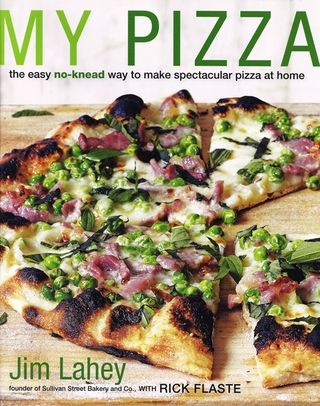
20121110-224811.jpgThe book–My Pizza, written by a baker named Jim Lahey–promises a “no-knead way to make spectacular pizza at home”. The book is filled with wonderful photographs of equally wonderful pizzas. No surprise that they look, and taste, as good as the best of DiMeo’s. Fresh ingredients and loving preparation are everything.

You begin with a pizza stone. Three-quarters thick is best because it retains heat more efficiently than the more common half-inch consumer model; visit a restaurant supply shop if you can’t easily find one online. A pizza “peel”–the paddle–is essential, but the long ones used in pro kitchens may be too long for yours, and a smaller one will be fine.

Leahy is okay with conventional flour but extremely picky about the olive oil. The best comes from Chile. The freshest cheese, the finest available tomatoes, these are critical.

Ovens are tricky. They need to reach high heat. Buy the book, read the chapter, because this part is a little complicated. You can do it–make great pizza in your own kitchen–but take care to do the work properly to avoid incident.

Next chapters: how to make the dough, then the tomato sauce, both from scratch. This is not a quick job. This is a messy job, gloriously so. But then here’s that first tomato pie–your freshly made dough, your freshly made tomato sauce, a touch of fin sea salt, and a drizzle of your best olive oil. Three (!) minutes later, maybe five if you let it cool, you’re eating the best pizza of your young life. A week later, you’re completely addicted to your own variation on Leahy’s veal meatball pie, one of a few dozen specialty pies in this handsome cookbook.

Frozen pizza? Domino? Fuhgeddaboudit. Go buy the book and make your own.

Provocative Economics from C. Christensen

Excellent article in last Sunday’s NY Times by Clayton Christensen.

Christensen is a Harvard professor who studies innovation, and has written several superb books about how and why it works. His theories turn on a key concept: there are several types of innovation, most notably innovation that sustains and incrementally improves a current situation, and innovation that disrupts, changes the rules.

In this article, he expands his thinking to explain why and how capital can and must be freed to fund an emerging new economy.

BTW: C.C. writes an excellent blog.

The picture comes from Harvard Business School. Whether he is or is not the “top” guy, he’s certain high on my list.

Go read the article. Totally worth your time.

Media Shift / Cutting the Cable

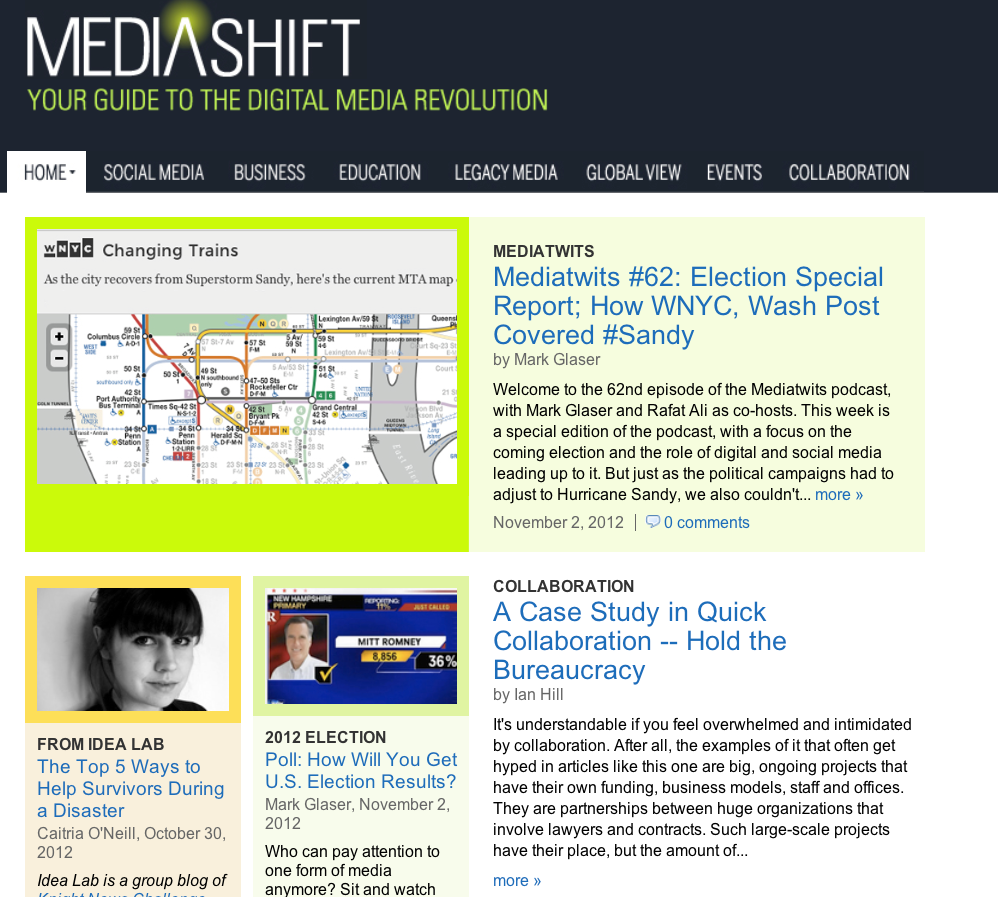
Although I am probably late to the game, I just discovered two very useful tools. The first is a blog post and the second is the blog itself.

Blog post: 2012 Guide to Cutting the Cable

Blog: Media Shift

One at a time:

The article explains the available hardware and software, then provides several case studies of users who have cut the cable, and ends with a very useful list of other articles on the subject.

The blog is stupendous. Here’s local, national and international news and commentary on shifts in just about every modern media industry. The coverage gets down to the hyper-local level, and also offers an extremely wide view of, say, the recent announcement of a merger between two of U.S. publishing’s giants: Penguin and Random House (the latter wins). That article, and this blog, does what so few do: it provides context. So the article about book publishers looks not only at consolidation’s impact on publishing, but also compares the situation with consolidation in the music industry.

Kudos to PBS for this lesser-known project. I now plan to read Media Shift every day.