Know What? Why?

New York Times illustration by Viktor Koen

Here’s an article by former Harvard President Lawrence Summers. It was tucked into the Education Life section of the January 22, 2012 issue, so you may have missed it.

http://www.nytimes.com/2012/01/22/education/edlife/the-21st-century-education.html?pagewanted=all

Summers is attempting to change the debate. Some key ideas:

1. Getting information is now the easy part. Twenty-first century education ought to be about processing and contextualizing information.

2. Processing and contextualizing leads to collaboration.

3. New technology allows the best teachers to be connected to every student. Everything else seems to be clutter.

4. Despite best efforts on the interactive side, most learning is passive: watch, listen, learn. Active learning is the future, but we’re just beginning to understand how and why.

5. Learn a language. Travel the world. Be global.

6. Education must shift from information dissemination to analysis.

Although he’s on the elitist side, the ideas make sense. The complete article isn’t long, but it does present ideas worth pondering.

Tools: Publish your own eBook (or, iBook)

Within the next 30 days, I am going to publish my first eBook. How I wish Mashable had published this chart of eBook publishing software applications before I got started. I struggled through Adobe InDesign and gave up. I would have used Apple iBook Author but it was not available. For me, Scrivener was the best available solution–and it seems to be working, but Apple has upped the game with its (and free) software.

Have a look, and be sure to pass this post on to anyone who might be considering their first eBook.

A chart comparing all the ePub tools available to users.

How iBooks Author Stacks Up to the Competition [CHART]

Big Cities, 1860 Edition

I just came across the 1860 census. Fascinating.

With just over 800,000 people, our biggest city was New York. Philadelphia was second with just over a half-million. Third? Brooklyn, not yet part of New York, followed by Baltimore and Boston.

New Orleans was the sixth largest city, about the size of Cincinnati and St. Louis.

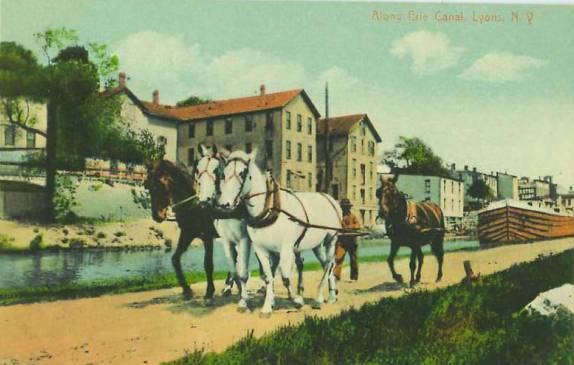
Surprises?  Buffalo, Rochester, Albany, Troy, Utica–the Erie Canal was completed in 1825, so this was high time for upstate New York. Also, Newark (NJ) as our eleventh largest city, on par with Washington, D.C., Detroit, Cleveland, Charleston (South Carolina), Hartford (CT). None of these cities were larger than 100,000; in fact, most of them were smaller than 50,000. Newark was home to 72,000 people–about the size of a modest suburb today.

Only one city on the list was west of the Mississippi: San Francisco. Population, just over 50,000, or about the size of Pittsburgh (then, Pittsburg), PA.

If you feel like exploring, visit: http://www.census.gov/population/www/censusdata/hiscendata.html